
Thermal and acoustic insulation
Spray Foam Insulation from China
Explore spray foam insulation sourcing for approved thermal-envelope applications. Compare technical requirements, compatible components, supplier evidence and export scope for your project.
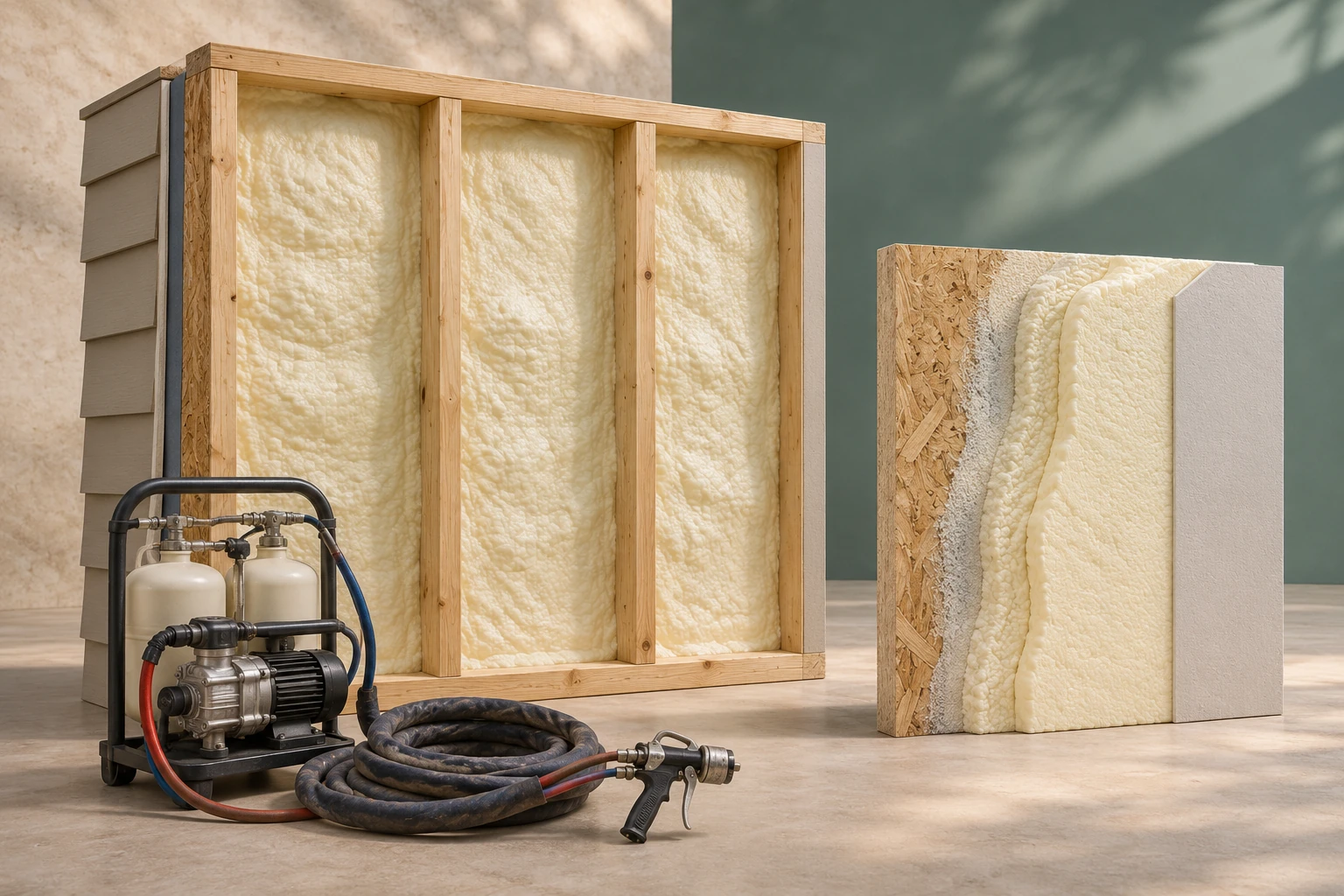
Spray Foam Insulation for approved thermal-envelope applications
Open-cell and closed-cell products have different properties and uses. Request a qualified installation plan, ventilation and occupancy instructions and substrate conditions. The installed density, thickness and required protective layers need documented inspection.
Select insulation within a designed wall, roof or floor assembly. Coordinate thermal, acoustic, moisture and fire requirements and compare products at stated test conditions. Match long-term compression, movement and water exposure to the installed location rather than using density as a universal selection rule.
Build the purchase brief around the exact application. Tell the supplier which requirements are fixed and which alternatives may be proposed. Confirm the formulation, grade, drawing or model behind the product identity and review its evidence before accepting a substitution.
Understand the product and its interfaces
Use the product study and illustrative layer guide to organize the technical discussion. Request the final project detail from the supplier and responsible designer.
Confirm condition, geometry and compatibility at the starting interface.
Request the exact material, installation and connection to adjacent parts.
Request the exact material, installation and connection to adjacent parts.
Coordinate final protection, exposure, inspection and maintenance.
Coordinate joints, openings, terminations and later trades. Record who owns each interface and obtain approval when a proposed component changes another part of the assembly.
Technical specification and supplier response
Ask suppliers to respond to the same schedule with proposed values, evidence and exceptions. Project drawings and the final technical submission define the purchased product.
| Zone de décision | Information to request |
|---|---|
| Foam type | Describe required foam type for approved thermal-envelope applications and ask for the exact proposed value or configuration and reference. |
| Density | Request method, conditions and acceptance limits for density. Match results to the supplied formulation, grade or model. |
| Yield | List interfaces and limits affecting yield. Check the approved construction and adjacent materials. |
| Substrate and cure | Confirm substrate and cure on the sample or project method and record any deviation and the party approving it. |
| Thickness | State nominal and tolerance or installed layer build, inspection method and effect of variation. |
| Protective lining | Include protective lining in the written quotation and ask for current documents and a change-notice procedure. |
Take off area and thickness by board or batt dimensions and cutting layout. Include shaped pieces, fasteners, tapes and protective layers. Compare spray products by verified installed yield, density and inspection of final thickness.
Keep the measurement basis clear
State the appropriate area, volume, mass, length or piece unit. Check whether a pack is a complete kit and whether consumption is theoretical or practical. Calculate quantity using the approved specification, documented supplier yield and agreed loss allowance. Recheck rounding, accessories and spare stock.
Preparation, application and installation
Have the designer establish condensation and fire strategy and define supports, fixings and control layers. Follow exact installation instructions and inspect gaps, compression, thickness and continuity before closure. Spray-applied products require their own application and curing plan.
Confirm the base and adjacent materials
Review drawings and site records and identify the condition and geometry that the exact product requires. Resolve weak, damp or unverified interfaces with the project team before release.
Approve a representative sample
Use the intended materials, accessories and method. Compare foam type, density, yield and record the accepted version and results.
Release the controlled method
Obtain current instructions and define competent installers, equipment, storage, sequence, protection and hold points. Record conditions and deviations and identify who approves changes.
Inspect and hand over
Verify parameters before concealment or loading. Keep reports, batch records, as-built details and instructions for maintenance, compatible repairs and spare supply.
Quality checks and technical documents
Agree sampling, methods and acceptance before manufacture or dispatch. Inspection should match the specified service and delivered configuration. Reports should state the inspected lot, limitations and deviations.
Product grade and thickness
Record the method, approved reference, observed or measured result and corrective action. Identify the responsible inspector and approval before accepting the material or work.
Joints, fixings and fit
Record the method, approved reference, observed or measured result and corrective action. Identify the responsible inspector and approval before accepting the material or work.
Required protective layers
Record the method, approved reference, observed or measured result and corrective action. Identify the responsible inspector and approval before accepting the material or work.
Supplier submission package
- Manufacturer and exact product, grade or formulation, current data sheet and relevant drawings.
- Reports for the stated performance, with sample identification, method and test conditions.
- Relevant batch, production, mill or manufacturing records and traceable labels.
- Installation, maintenance and repair instructions, plus current safety and storage information where applicable.
- Written exceptions, approved substitutions and responsibilities for project and destination acceptance.
Consult Building-science guidance on insulation types for relevant background. Ask the responsible designer and importer to determine applicable project and destination requirements.
Wholesale pricing, OEM options and export scope
MOEWORLDWIDE supports China product sourcing, supplier communication, inspection coordination and export shipping within the scope agreed for the enquiry. Request spray foam insulation against the selected grade or configuration, quantities and destination.
Compare the commercial scope
Ask for unit price, MOQ by variant, samples, development or tooling, lead time, validity and payment milestones. Identify factory, service, inspection, packing and freight charges. Confirm private-label work and ownership of approved drawings or artwork.
Packing, storage and freight
Request pack dimensions, net and gross weights, pallet layout, stacking limits and handling instructions. Define moisture, temperature and shelf-life conditions. For mixtures, provide current safety data and transport classification to the freight coordinator. For heavy or long goods, agree lifting, securing and destination unloading.
Warranty and supply continuity
Define covered defects, claim evidence, response and repair or replacement in writing. Confirm compatible spares and notification of formulation or manufacturing changes. Preserve lot identity and storage records where condition or shelf life affects acceptance.
Utilisez le China import quotation checklist and sourcing and inspection process to compare the final offer.
Request a quote for spray foam insulation
Share a project brief so MOEWORLDWIDE can review the sourcing scope, compare proposed suppliers and coordinate samples, inspection and export requirements.
- Project and destination. Provide building use, country, receiving port or city, drawings and target installation dates.
- Product schedule. List item, quantity, unit, grade or performance, approved alternatives and adjacent materials.
- Evidence and samples. Identify required documents, mock-up, acceptance tests, factory inspection and technical approval.
- Commercial scope. Confirm packaging, languages, private-label requirements, spares and preferred delivery and service terms.