
Mobile devices & accessories
Source e-readers from China
E-readers use reflective electronic paper for reading and document review. A good wholesale brief distinguishes screen size, front-light options, supported file formats, content handling and how pages refresh. For schools, libraries and retail programs, request a repeatable reading test on the actual file mix and language before selecting an enclosure or storage configuration.
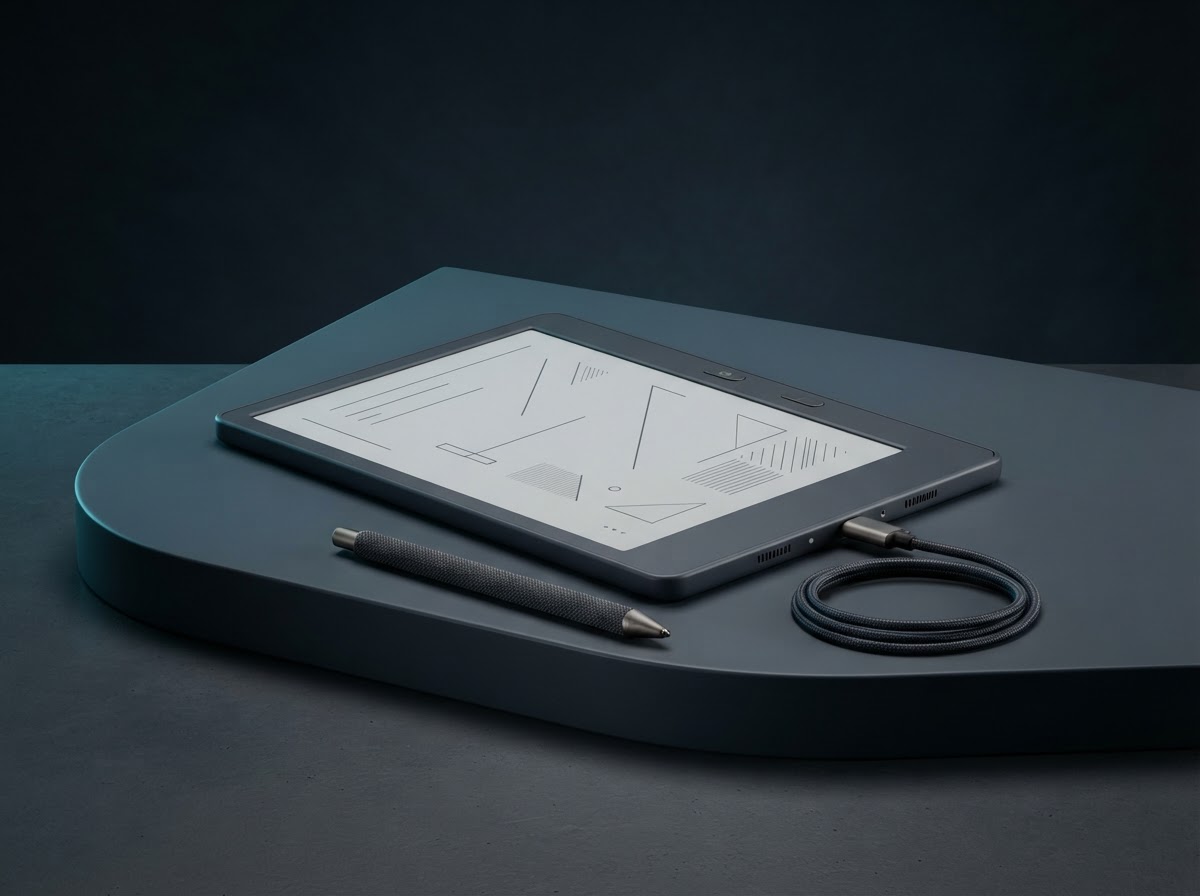
E-Readers by application
Choose the format that fits your buyer’s environment, operating requirements and support plan. Use the exact model identifier in every quotation and sample request.
Compact reading device
Check one-hand grip, page turn behavior, front light uniformity and formats for novels and course materials.
Large-format document reader
Prioritize readable diagrams, PDF zoom and storage for technical or academic documents. Confirm landscape handling and annotations.
Pen-enabled reading tablet
Match pen type, stroke latency and export format to the buyer's workflow. Confirm if the pen, nibs and case are included.
Inside and outside the product
Explore the enclosure, interfaces and internal assembly. Open each component to see what it does and which design details affect sourcing.
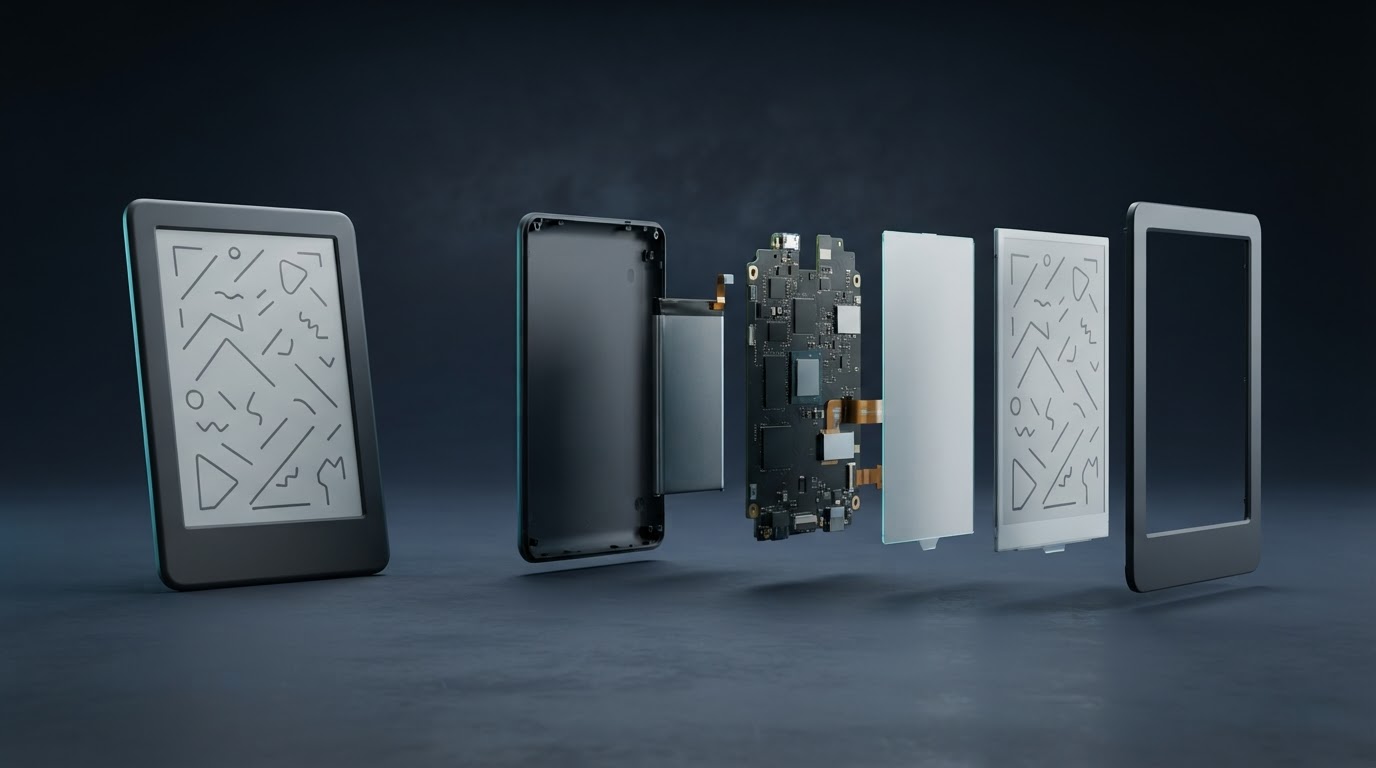
E-paper panel
A reflective layer changes its visible state under electrical control. Partial refresh modes can trade speed for visible residual images.
Front-light guide
LEDs illuminate the surface through a light guide. Verify uniformity and adjustable color temperature where specified.
Touch and cover glass
The input layer and cover affect glare, scratch resistance and pen feel.
Controller and storage
The controller renders formats, manages refresh and stores books and annotations.
Battery and rear case
Capacity, sleep behavior and wireless usage shape practical runtime.
E-Readers specification table
Ask each supplier to state a proposed value, supporting evidence and any deviation for the exact model it quotes. Measure samples under the same operating conditions before confirming the final configuration.
| Parameter | Specify or request from the supplier |
|---|---|
| Display | Set diagonal, pixel density, monochrome or color, front light and visible ghosting or uniformity acceptance. |
| documents | Test EPUB, PDF and other required formats with actual large files, right-to-left scripts, image-heavy pages and annotation export. |
| Content distribution | Confirm file sideloading, store or DRM dependencies where applicable, account policy and library-management permissions. |
| Input | Ask for touch type, stylus support, palm rejection, page-turn controls and nib replacements. |
| Wireless and storage | List Wi-Fi, USB storage mode, internal capacity and expansion, plus software backup. |
| Power and durability | Ask for capacity, sleep and reading assumptions, USB power, case protection and display replacement options. |
Compare the offer line by line
Separate case, screen protection and stylus from the base price. Agree who maintains the software image, how library account locks are removed and whether broken screens can be replaced economically.
Record unit price, minimum order by configuration, sample cost, lead time and quoted handover terms. Use the China import quotation checklist to compare the cost and inclusions of each offer.
From sample to shipment inspection
Agree the sample, test method and acceptance limits before releasing a production order. Build the report around the product’s expected use and the components that can change between lots.
Representative sample
Load documents across the target languages and sizes. Compare full and partial refresh modes, front light at minimum and maximum and wake from sleep with the same file.
Production lock
Approve panel and firmware identifiers, font packs, charger inclusion and approved artwork. Check whether stylus and case can be packed together.
Inspection
Inspect background uniformity and stuck display areas. Run USB transfer, charge, annotate a sample page and export it. Verify included pen, tips and manuals.
See how supplier selection and inspection coordination fit into the MOEWORLDWIDE sourcing process.
Documentation, packing and export
Document review
Capture model-specific radio evidence and operating instructions for the destination if wireless functions are included. Request the battery test summary for the exact installed pack, along with component and firmware details for any customized edition.
Freight and carton details
E-paper panels need protection from bending and point loads. Ask for rigid internal support and packing validation, box count, size and gross weight. Confirm loose pens or accessory cells by carton.
Confirm the commercial invoice, packing list, delivery term, cargo handover and any destination-specific documents with the parties responsible for the shipment.
Request a sourcing quote for e-readers
Share the details below so MOEWORLDWIDE can compare offers on the same scope, including the supplied configuration, documentation, inspections and delivery terms.
- Application and market. Identify the compact reading device, large-format document reader or another configuration you are evaluating, and name the destination country and receiving city or port.
- Product specification. Include your target values for display, documents, content distribution and attach a current drawing, reference unit or datasheet if available.
- Order and packaging. List quantity by model, trial order size, likely repeat volume, required pack languages, accessories and target delivery date.
- Evidence and terms. List required reports, sample approvals, inspection scope, warranty expectations and preferred freight handover point.