
Mobile devices & accessories
Source smartphones from China
A wholesale smartphone brief starts with the sales market and carrier, then narrows to the display, operating system, cameras, storage and repair plan. Importers, mobile distributors and fleet buyers can compare entry-level 4G handsets, midrange 5G phones and reinforced field devices using the same sample acceptance criteria.

Smartphones by application
Choose the format that fits your buyer’s environment, operating requirements and support plan. Use the exact model identifier in every quotation and sample request.
Retail 4G handset
Prioritize local voice and data compatibility, language support and battery availability. Ask whether regional firmware changes preinstalled apps or update delivery.
5G consumer model
Confirm regional band combinations, camera hardware and storage tiers before comparing prices. Review thermal behavior under video capture and mobile data.
Rugged field handset
Define drop and ingress requirements, glove use, charging cradle and accessories. Verify warranty treatment for damaged seals and connectors.
Inside and outside the product
Explore the enclosure, interfaces and internal assembly. Open each component to see what it does and which design details affect sourcing.
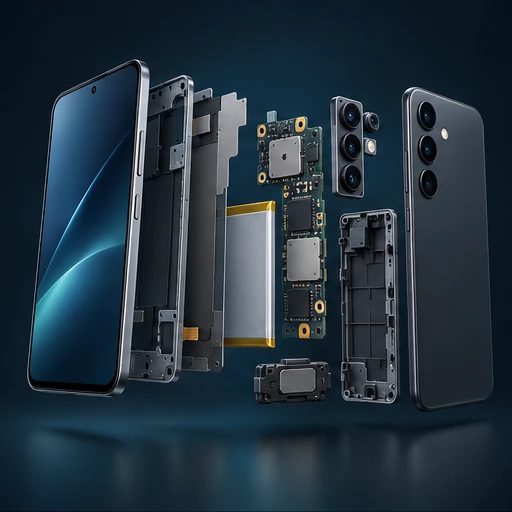
Cover glass and display
The touch layer and OLED or LCD assembly determine readability, response and much of replacement cost.
Chassis and antenna
The frame holds the screen, radio antennas and controls. Frame and case changes can affect reception.
Logic board
The processor, memory and radios connect the display, camera modules and wired ports.
Camera stack
Lenses and sensors feed the image processor. Each lens can have its own sensor and focus capability.
Battery and speakers
Rechargeable cells supply the logic board. Separate modules handle calls, media sound and vibration.
Smartphones specification table
Ask each supplier to state a proposed value, supporting evidence and any deviation for the exact model it quotes. Measure samples under the same operating conditions before confirming the final configuration.
| Parameter | Specify or request from the supplier |
|---|---|
| Radio configuration | List target countries and carriers, band combinations, VoLTE, SIM or eSIM requirements and any carrier approval check. |
| Screen | Record panel type, diagonal, resolution, refresh mode, touch behavior and a measured brightness target. |
| Compute and storage | Lock processor identifier, RAM, usable storage, expansion and thermal or throttling criteria. |
| Cameras | Specify main and secondary sensor identifiers, optical or electronic stabilization, recording modes and autofocus behavior. |
| Battery and charging | Ask for rated capacity in mAh and Wh, charging protocol and power, cable and adapter contents. |
| Software and records | Set OS version, signed update path, support dates, model labels, IMEI handling and language packs. |
| Mecánico | Record size, weight, ports, speaker location, seal and screen or battery service method. |
Compare the offer line by line
Have the offer itemize packaging, ROM or language customization, included charger, spare screens and replacement batteries. Define dead-on-arrival handling by IMEI, replacement lead times and supported security updates.
Record unit price, minimum order by configuration, sample cost, lead time and quoted handover terms. Use the China import quotation checklist to compare the cost and inclusions of each offer.
From sample to shipment inspection
Agree the sample, test method and acceptance limits before releasing a production order. Build the report around the product’s expected use and the components that can change between lots.
Engineering sample
Insert a local SIM, run calls and data, capture low-light video and verify RAM and storage from system diagnostics. Agree which settings and preloaded apps become the retail image.
Production release
Record the bill of materials for display, cameras and cell, lock firmware hash and approve carton artwork by market. Ask how the factory handles engineering changes.
Shipment inspection
Check serial and IMEI mapping, screen defects, charging temperature, speaker quality, camera focus and accessory count. Use the approved unit as a comparison.
See how supplier selection and inspection coordination fit into the MOEWORLDWIDE sourcing process.
Documentation, packing and export
Document review
Match proposed radio and electrical evidence to the exact regional model and firmware. Ask what the declaration and radio reports cover, whether the supplied charger has its own evidence and whether the battery model has a transport test summary. Validate the target carrier and commercial licensing for bundled software before ordering.
Freight and carton details
Separate retail-packed handsets from loose spare cells on the packing list. Provide cell Wh, model and installed or spare status to the freight coordinator. Ask for tray protection around the display and cameras, master-carton dimensions, gross weights and serial-level carton mapping.
Confirm the commercial invoice, packing list, delivery term, cargo handover and any destination-specific documents with the parties responsible for the shipment.
Request a sourcing quote for smartphones
Share the details below so MOEWORLDWIDE can compare offers on the same scope, including the supplied configuration, documentation, inspections and delivery terms.
- Application and market. Identify the retail 4g handset, 5g consumer model or another configuration you are evaluating, and name the destination country and receiving city or port.
- Product specification. Include your target values for radio configuration, screen, compute and storage and attach a current drawing, reference unit or datasheet if available.
- Order and packaging. List quantity by model, trial order size, likely repeat volume, required pack languages, accessories and target delivery date.
- Evidence and terms. List required reports, sample approvals, inspection scope, warranty expectations and preferred freight handover point.