

Hygiene & Disinfection Products —
Sourced in China, Supplied Worldwide
Discover export-ready personal hygiene, professional cleaning, sanitization, disinfection and infection-prevention solutions for global wholesale and distribution.
Product categories to explore
Sourcing product types in this catalog
Supplier enquiries, quality-control coordination and sea or air freight planning through MOEWORLDWIDE’s published sourcing services.
Hygiene products wholesale from China, with a clear path from brief to shipment.
For importers, distributors, procurement teams and private-label brands, useful sourcing starts with the intended product and selling market. This page connects product discovery with packaging, documentation and export planning, so enquiries can be compared on a consistent scope.
The catalog describes sourcing categories, not verified manufacturer stock. Ingredients, concentrations, pack sizes, minimums, prices and authorizations remain pending until supplied and reviewed. All original product and setting visuals are AI-generated concepts. They are not evidence of actual facilities, inventory, certification or performance.
Explore the product landscape.
Choose a category, then build a shortlist in the product explorer. Each category has its own intended-use and evidence questions.

Personal hygiene
Build a coherent personal-care assortment around the user, format and retail channel. Define fragrance preferences, pack sizes, dispensing, language and intended claims before comparing suppliers. Cosmetic, drug and general consumer classifications can differ by product and market.

Sanitizing products
Hand-use and surface-use products require distinct briefs. Identify proposed claims, active-ingredient information to request, packaging and the selling market. A requested alcohol or alcohol-free formulation is a development direction, not evidence of availability or authorization.

Disinfectants
Disinfection sourcing begins with the intended use and selling market. Ask for the exact product identity, authorized label where applicable, use directions and product-specific evidence. An ingredient family or a supplier certificate alone cannot establish efficacy or lawful sale.

Antiseptic enquiries
Antiseptic products may follow drug, medicinal, biocidal or other routes depending on intended use, ingredients, claims and destination. Enquiries remain conditional until qualified specialists confirm eligibility. This catalog supplies no treatment advice or verified medicinal product offers.

Professional infection prevention
Personal protective equipment, medical devices and general-use consumables are different procurement routes. Define intended use, relevant performance requirements, construction and traceability. Verify that reports and certificates cover the exact product, manufacturer and intended market.

Industrial and commercial hygiene
Commercial buyers need connected decisions about products, dispensers, dosing, operator instructions and replenishment. Consider workplace use, surface compatibility and storage. Compare the cost and handling of the complete system instead of treating every container as interchangeable.

Home and institutional cleaning
Cleaning products should describe their intended tasks and surfaces. Antimicrobial claims can change classification and supporting evidence. Establish product-container compatibility, consumer or professional instructions, pack language and shipping considerations before ordering.

Hygiene equipment
Equipment selection should consider refill compatibility, installation, dosing, maintenance and power where relevant. A dispenser does not establish the regulatory status of its contents. Confirm applicable electrical, product safety and operating requirements for the destination.
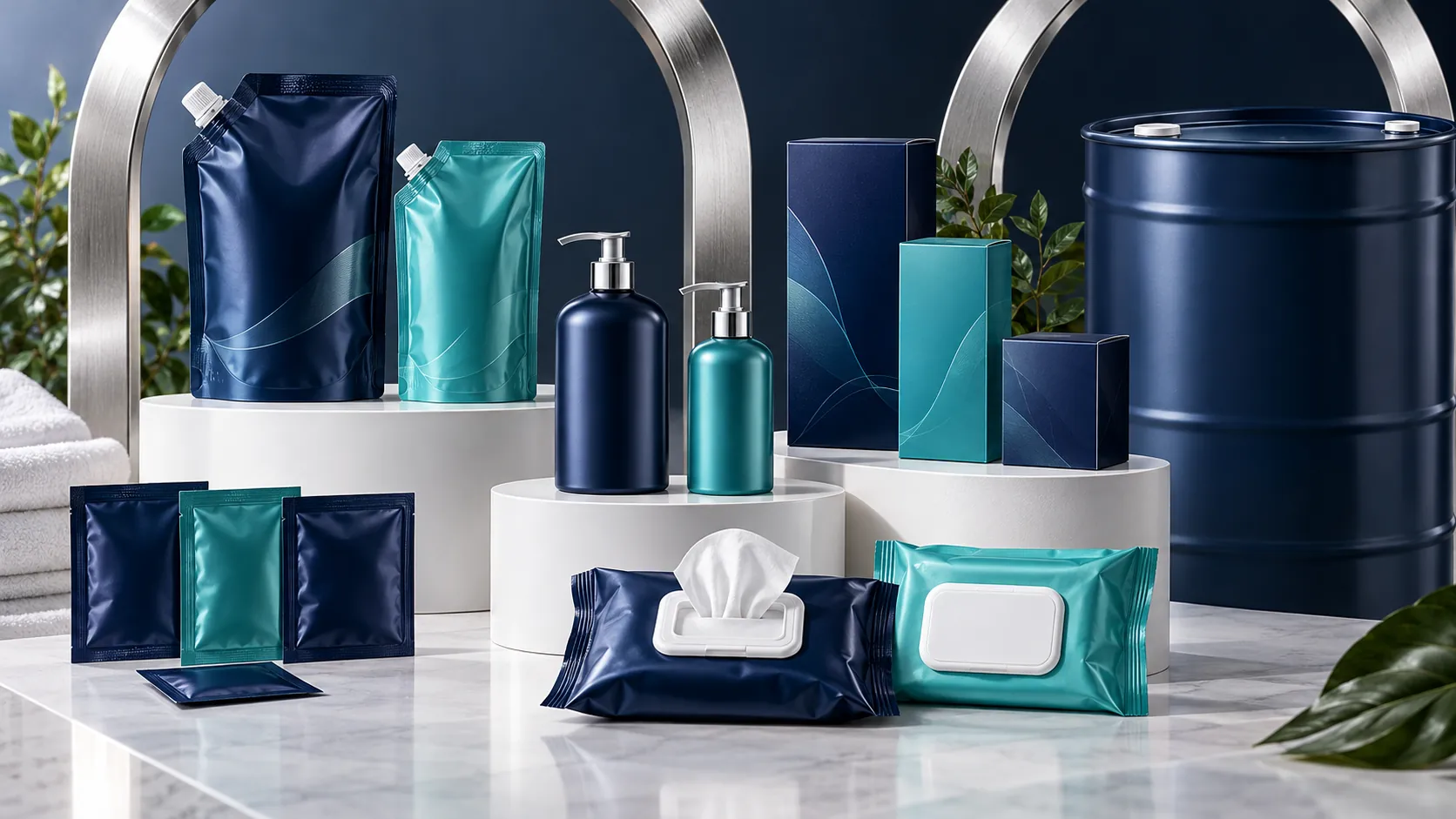
Packaging and private label
OEM and ODM enquiries should separate product development from decoration, filling and packing. Establish formula and artwork ownership, claims review, component compatibility, minimums by component and approved sample versions before the production order.

Related care and hygiene
Baby, elderly, feminine, hospitality, travel and animal-care applications have different intended users and claim boundaries. Describe the actual application and assess each product individually. Specialized institutional or veterinary uses remain conditional on legal eligibility.
Find the products for your sourcing brief.
Search by product type, compare up to three entries and add your selection to a single RFQ. Unverified specifications remain clearly identified.
Different settings. Different procurement questions.
Healthcare & institutional buyers
Define the intended clinical or facility use, user protection requirements, traceability and exact product evidence. Medical, PPE, biocidal and medicinal routes must not be treated as interchangeable.
Discuss this applicationHospitality & property management
Coordinate amenities, paper supplies, refill systems, housekeeping products and replenishment. Include dispenser fit, storage, language and pack quantities in the facility brief.
Discuss this applicationFood service & commercial kitchens
Separate food-contact and non-food-contact use. Proposed sanitizer directions, any rinse conditions and eligibility must match the actual product and applicable local authorization.
Discuss this applicationWholesale & private-label distribution
Build a range matrix with each SKU direction, quantity, selling market and pack format. Keep formula, packaging, claim and evidence work visible before production commitments.
Discuss this applicationCleaning, sanitizing, disinfecting and antisepsis are different briefs.
| Direction | Intended use question | Evidence to establish |
|---|---|---|
| Cleaning | What soil and surface or personal-care task is intended? | Product specification, handling information and support for proposed claims. |
| Sanitizing | Is the use on hands, another body site or a surface? | Exact formulation, use directions and destination-specific regulatory assessment. |
| Disinfection | Which surface, setting and authorized claim are intended? | Product-specific evidence, applicable authorization and approved instructions. |
| Antisepsis | What skin-use or other body-site purpose is proposed? | Qualified assessment of medicinal, drug, biocidal or other applicable route. |
| Protective consumables | Is the item general-use, PPE or a medical device? | Construction, intended purpose and applicable model-specific performance evidence. |
Classification depends on composition, intended use, claims and destination. Cosmetics, biocides, pharmaceuticals, medical devices and cleaning preparations require different assessments. Product names alone do not settle the route.
Quality assurance starts before the purchase order.
Agree the specification, approval references and inspection scope before production. Manufacturing support is supplier-dependent; MOEWORLDWIDE coordinates enquiries and follow-up without claiming ownership of the facilities shown in conceptual artwork.
- Supplier and product review
Identify the legal manufacturer and proposed product. Compare the specification and available evidence with the buyer’s actual intended use.
- Sample and component approval
Review the product, dispensing, closure, substrate or construction and retail presentation. Keep revisions and approved references together.
- Production and release checks
Define inspection stages, defect criteria, traceability and the person authorizing shipment. Inspection does not replace required product testing or market authorization.
AI-generated application setting. Not a photograph of a MOEWORLDWIDE factory or supplier facility.
Evaluate the China sourcing scope, not just the unit price.
A sourcing enquiry can compare product platforms, components, packing and supplier processes. The practical advantage comes from a coordinated brief and transparent quotation, rather than an assumed lowest price. Development, evidence work, testing, freight and destination responsibilities can materially affect the landed scope.
| Compare | Ask for | Watch for |
|---|---|---|
| Product scope | Exact formula or material reference, intended use and packing. | Different specifications presented as equivalent offers. |
| Commercial scope | MOQ by item, sample work, tooling, inspection and freight boundaries. | Costs omitted from the headline unit price. |
| Approval schedule | Sample rounds, packaging approvals, evidence work and production milestones. | A lead time quoted before necessary decisions are defined. |
| Change control | Versioned samples, artwork, materials and supplier responsibilities. | Unrecorded changes to formula, components or claims. |
Private label, with the detail already considered.
Bring product, packaging, approved claims and the selling market into one development brief. Compare stock platforms and custom work as separate options.
OEM, ODM and packaging development.
Discuss product platforms, formula development where available, multilingual labels, refill pouches, bottles, sachets, bulk drums, retail cartons and institutional formats. Availability and commercial terms are confirmed for each supplier project.
Own the brief and the approvals
Define the product, intended use, market, claims and target quantity. Agree formula, design, tooling and artwork ownership, permitted use and revision milestones in writing.
Make components work together
Assess closure, dispenser, substrate and product-container compatibility. Confirm filling, leakage protection, carton packing and actual transport conditions.
Review language and claims before print
Use approved translations and destination-specific label review. A wording change can alter classification or required evidence; do not treat artwork approval as a purely visual decision.
Export planning, from specification to receiving.
- Define product and destination
Record the intended use, proposed claims, exact products and quantities. Confirm the buyer and responsible importer.
- Review suppliers and samples
Compare suitable options, documents and approval references before releasing development or production.
- Confirm classification and evidence
Assign regulatory review, ingredient or material eligibility, authorized claims, label approval and customs classification.
- Approve packing and freight
Provide actual composition and shipment details to the freight provider. Confirm carrier acceptance, delivery terms and required export documents.
- Inspect and release
Review agreed findings, resolve open items and retain the product and packaging version used for the shipment.
- Receive and maintain the record
Check the goods against approved references. Keep batch or product identifiers, receiving feedback and changes for future orders.
Documentation means matching evidence to the actual product.
Product specification and identity
Confirm product name, manufacturer, formula or material version, intended use and presentation. Keep this identity consistent across samples, labels and documents.
SDS, COA and test reports
An SDS, where applicable, describes hazards and handling. A COA reports defined batch results. Testing should match the actual product, use and conditions. None is a universal replacement for market authorization. ECHA safety data sheet guidance.
Registrations, authorizations and certificates
Request them only where applicable, check issuing bodies and validity, and confirm the exact product and scope. No FDA, EPA, CE, ISO, EN or WHO status is promised by this page.
Export and customs records
Agree commercial invoice, packing list and relevant shipment documents. The customs broker should classify the actual composition, use and presentation against the destination tariff; no HS code is assigned to these generic sourcing entries.
Storage and transport information
Request actual shelf life, storage conditions, packaging compatibility and transport classification. Alcohol-containing and other hazardous products need the relevant carrier and dangerous-goods review. See IATA dangerous-goods information.
Prepare for the country where the product will be sold.
Regional labels are starting points for an enquiry. Eligibility must be checked for the exact country, formulation, purpose, claims and supply-chain role. The guidance below does not confirm any catalog entry for sale.
United States
Assess the applicable EPA route for surface antimicrobial products and FDA route for hand antiseptics, cosmetics or medical devices as relevant. Verify exact product status, proposed label and importer responsibilities. A registration or listing should not be treated as product approval. EPA import guidance; FDA topical antiseptics.
European Union and EEA
Evaluate EU BPR, EU MDR, Cosmetics Regulation and any medicinal route according to actual purpose and claims. Assess REACH and CLP duties for the mixture and business role where applicable, including required information and language. EEA implementation and the selling country need their own review. ECHA BPR; EU cosmetics; EU medical devices.
United Kingdom
Assess Great Britain and Northern Ireland separately. HSE biocide requirements, MHRA device or medicinal routes and cosmetic requirements may apply to different products. Confirm the actual product route, responsible business, label and import requirements. HSE product guidance; UK medical devices.
Middle East
Identify the exact destination country and responsible importer before ordering. Confirm whether the product follows consumer, chemical, health-product, device or other local controls. Request local language, authorization, labelling and customs review. Saudi Arabia and UAE requirements should not be treated as a shared regional approval. Saudi Food and Drug Authority.
Africa
Assess the specific country and product route, including local registration, standards, labelling and import responsibilities. There is no continent-wide authorization implied here. In South Africa, consult the applicable national bodies and product classification, particularly for medical or antiseptic positioning. SAHPRA guidance library.
Southeast Asia
Rules differ by country and intended use. Confirm chemical, cosmetic, antiseptic, device or other controls with the local responsible importer. Singapore HSA information can inform Singapore-specific topical antiseptic review; it is not evidence of approval elsewhere. HSA topical antiseptics.
Latin America
Confirm the national route for the actual product and intended claims. Brazil’s ANVISA saneantes information is relevant to qualifying cleaning or disinfection products; other categories and countries require their own assessment. Check authorized presentation, labels, responsible importer and evidence before shipment. ANVISA saneantes.
Other destinations
Name the country, product, proposed use and sales channel. Assign a qualified local assessment of registration or authorization, permitted ingredients, claims, labelling, transport and importer duties before production commitments.
Buyer resources worth keeping.
- Importing Hygiene Products from China: Buyer Checklist
A practical hygiene sourcing checklist covering product briefs, sample approvals, documentation, packing, customs review and shipment responsibilities.
- Disinfectant Import Requirements: Claims, Evidence and Market Review
Understand why disinfectant import planning depends on the exact formula, intended use, claims, destination authorization and shipment documentation.
- OEM and Private-Label Hygiene Products: Development Brief
Plan a private-label hygiene range with clear product ownership, claims review, sampling, packaging compatibility and supplier quotation requirements.
- Prepare a comparable China sourcing quotation
Organize product specifications, quantities, packing and responsibilities before comparing suppliers.
- Download the hygiene import buyer checklist
A reusable product evidence, packaging and export review brief.
Hygiene sourcing questions, answered.
Which hygiene products can I enquire about?
The sourcing explorer covers personal care, sanitizing and disinfectant enquiries, antiseptic enquiries, protective consumables, industrial and home cleaning, equipment, packaging and related care. Supplier suitability and legal eligibility are assessed for the specific brief.
Are these products verified stock items?
No supplier SKU, price, stock position or authorization is represented as verified. Entries describe product types for sourcing enquiries. Detailed values stay pending until actual supplier information is obtained.
What is the difference between cleaning and disinfecting?
Cleaning concerns soil removal. Sanitizing and disinfecting claims need assessment for the exact use, evidence and destination. A cleaner should not be presented as an authorized antimicrobial product merely because it contains a particular ingredient.
Can you source alcohol-free or alcohol-based formulations?
These can be requested as development directions. Actual formula, active identity, concentration, suitability and destination eligibility must be confirmed with the selected supplier and qualified specialists.
Can I request hospital-use or skin antiseptic products?
Yes, as conditional enquiries. The relevant classification, registration, authorization, intended use and supporting evidence must be established before procurement or sale.
What is the minimum order quantity?
Minimums depend on the product, formulation, component, variant, decoration and supplier. No minimum is supplied for the current sourcing entries. Request a quotation with quantities separated by item and packaging component.
Do you provide FDA, EPA or CE approval?
No universal approval or certification is promised. Ask for exact product-specific evidence and verify the applicable route with the relevant authority or qualified specialists. Registration, listing, testing and conformity marking have different meanings.
Can I customize labels and packaging?
Private-label and OEM/ODM options are reviewed per project. Supply the product direction, intended market, language, proposed claims, pack format and quantity. Confirm compatibility, ownership, artwork approval and tooling separately.
Which documents should I request?
Start with the specification and identity of the actual product and manufacturer. Request SDS, COA, product-specific tests, authorization or registration evidence and other records where applicable. Their necessity depends on the product and market.
Can hygiene products ship by air or sea?
Freight depends on the actual contents, packaging, quantity, route and carrier acceptance. Alcohol-containing or other hazardous goods require product-specific transport assessment. No universal freight eligibility is implied.
Can I compare products and send one RFQ?
Select up to three product types for comparison and add multiple items to your shortlist. The quotation form accepts the combined sourcing brief, destination, packaging preferences and project requirements.
What should I include in a useful enquiry?
Include intended use, product types, proposed claims, destination, quantity by item, preferred packing, timing and any required documentation. You can also describe a product that is not listed in the explorer.
Bring us the product brief.
Share your shortlist, intended use, destination and packaging direction. MOEWORLDWIDE can review the sourcing requirements and clarify the next steps.
Details are used to review and respond to your enquiry. The form requests consent before submission.
Published by MOEWORLDWIDE. Procurement guidance reviewed against linked official sources on 14 October 2026. Product-specific technical and regulatory assessment is required before sensitive claims, import or sale. No verified supplier data was supplied for the generic sourcing entries.