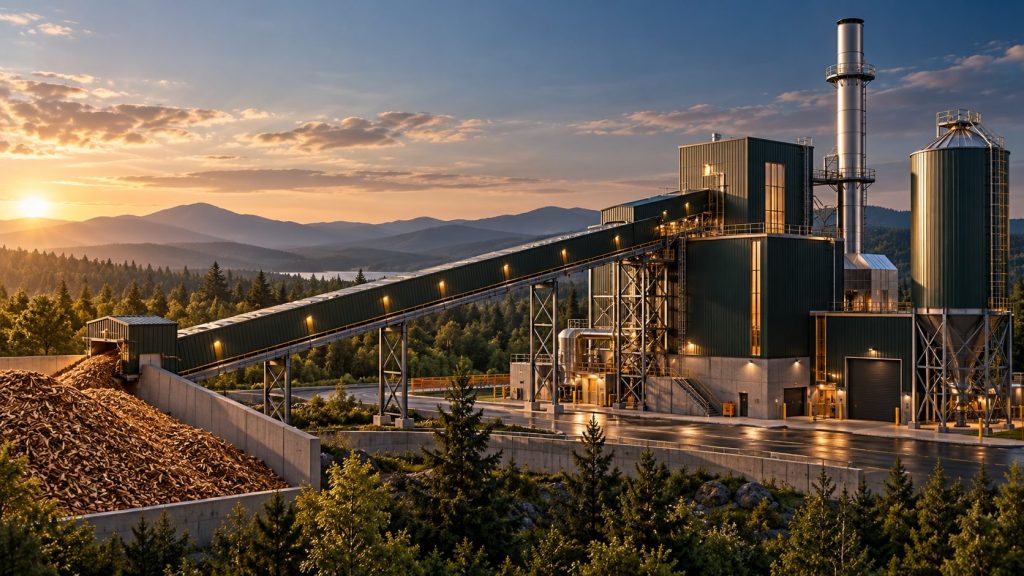
AI-generated concept illustration of biomass energy infrastructure

MOEWORLDWIDE · Renewable energy / Biomass Energy

Start with the fuel. Engineer the supply scope.

Biomass procurement is a fuel-quality, process and emissions decision as much as an equipment purchase. Share your feedstock analysis and energy duty with MOEWORLDWIDE for a sourcing-scope assessment covering supplier comparison, agreed checks and export coordination.

AI-generated concept imagery · Illustrative infrastructure, not a MOEWORLDWIDE facility or completed project.

Technology in context

How biomass energy works

Biomass combustion converts suitable organic fuel into useful heat, sometimes supporting electricity production through an engineered power cycle. Gasification creates a combustible gas that needs treatment before use. Anaerobic digestion is a related biological process: microorganisms break down suitable wet organic material without oxygen, producing biogas and digestate. These routes require different feedstocks and operating controls.

Equipment in focus

A visual guide to the biomass energy system

biomass equipment and energy pathwayFuel preparationConversion unitTreatmentUseful heat / power
Original explanatory graphic. Simplified equipment relationships; not an installation drawing or evidence of a supplied project.

Use the illustrated pathway to identify the interfaces that belong in your request for quotation. The equipment catalog defines the potential component scope; the project engineer must confirm the final arrangement.

Technical request matrix

What to put in your biomass energy RFQ

Ask each supplier to respond against the same schedule. Record its stated value, supporting document, exclusions and any deviation for every relevant parameter.

Project information and supplier response topics
Decision areaInformation to specify or request
Feedstock evidenceMaterial type, representative sampling, moisture, calorific value and contaminants
Fuel consistencyParticle-size distribution, ash, bulk density and seasonal supply variation
Process routeCombustion, densification, gasification or anaerobic digestion
Energy dutyThermal output, steam conditions or electrical duty and operating hours
Preparation lineShredding, screening, drying, milling, cooling and controlled feeding
Gas qualityComposition, pressure, tar, particulates and downstream engine limits
Digestion inputsOrganic loading, retention time, temperature and digestate route
Emissions basisPermit conditions, control equipment, measurement methods and calibration
Safety designFire, dust, pressure, gas leakage, guarding and emergency shutdown
UtilitiesElectrical demand, water, compressed air, heat and parasitic loads
Operating scopeStaffing, cleaning, consumables, ash handling and scheduled wear parts
AcceptanceFeedstock-specific tests, throughput basis, energy duty and agreed exclusions

Quotation comparison

Compare technical conformity, included components, packing, document scope, inspection access, production schedule and delivery responsibilities. Separate equipment cost from freight, insurance, local duties, civil works, installation, commissioning, consumables and service charges. Request validity and payment milestones in writing.

Change control and handover

Identify who approves substitutions. Record changes to model numbers, materials, firmware, interfaces and delivery dates before acceptance. Request final drawings, operating manuals, spare-parts lists, test records and a named service contact. Agree the defect-reporting and escalation process before handover.

Technical reference library

Renewable energy and biomass explained — U.S. Energy Information Administration. This independent introductory reference helps explain the technology; it does not certify a supplier or determine the requirements in your destination.

Continue with the China import quotation checklist and MOEWORLDWIDE sourcing process.

A system-level view

Biomass Energy: from resource to useful output

Qualified feedstock

Moisture, composition and supply consistency

Preparation + handling

Sizing, storage and controlled feeding

Conversion process

Combustion, gasification or digestion

Useful heat / power

Matched downstream equipment

Residues + emissions: Treatment, monitoring and permitted disposal are part of the design

Illustrative system boundaries. Expand or collapse each stage for detail. Final equipment interfaces require project engineering.

Feedstock specification · process route · useful energy

Biomass Energy procurement: the engineering behind the equipment

A better sourcing decision connects the resource, equipment interfaces and operating plan. Explore the system architecture, then use the application and verification notes to develop a comparable supplier enquiry.

01Qualified feedstock02Preparation + handling03Conversion process04Useful heat / powerRESOURCE / INPUT → CONVERSION → CONTROL → USEFUL OUTPUT
Original conceptual equipment visualization. The shapes identify procurement interfaces; they are not product drawings, performance data or evidence of a supplied installation. Read the detailed stages below on any screen size.
INTERFACE 01

Qualified feedstock

Moisture, composition and supply consistency. Establish the input and output conditions, equipment boundary, document requirements and responsible party for this stage. Record any supplier deviation before approving the connected package.

INTERFACE 02

Preparation + handling

Sizing, storage and controlled feeding. Establish the input and output conditions, equipment boundary, document requirements and responsible party for this stage. Record any supplier deviation before approving the connected package.

INTERFACE 03

Conversion process

Combustion, gasification or digestion. Establish the input and output conditions, equipment boundary, document requirements and responsible party for this stage. Record any supplier deviation before approving the connected package.

INTERFACE 04

Useful heat / power

Matched downstream equipment. Establish the input and output conditions, equipment boundary, document requirements and responsible party for this stage. Record any supplier deviation before approving the connected package.

Residues + emissions: Treatment, monitoring and permitted disposal are part of the design. Define this additional scope explicitly so it is not lost between equipment suppliers.

Choose the right project boundary

Different applications need different procurement briefs

Use the route that matches your intended operation. Capacity, commercial maturity and local installation conditions can change the appropriate supplier, documentation and acceptance process.

Solid biomass heat and steam

Define fuel origin, moisture, particle size, ash and contaminants using representative samples. Specify useful heat or steam duty, operating hours and the emissions basis. Review fuel handling, combustion, ash removal and treatment equipment as one process rather than purchasing a boiler in isolation.

Pellet and briquette production

Densification equipment prepares fuel; it does not by itself generate electricity. Coordinate shredding, drying, milling, pelletizing, cooling and screening against the actual feedstock. Compare throughput at a defined moisture level and include power demand, wear parts and product quality requirements.

Biogas and gasification

These are different process routes. Anaerobic digestion depends on biological inputs and process stability; gasification depends on thermal conversion and gas cleanup. Establish gas composition, downstream engine limits, condensate treatment and residual handling before selecting equipment.

From brochure to evidence

What a complete supplier response should contain

Ask for a dated, model-specific response against your technical schedule. Keep the manufacturer's statements separate from independently checked documents and from items still awaiting project approval. An attractive presentation is not a substitute for traceable equipment identity.

Supplier evidence and buyer review schedule
Review packageAsk the supplier forBuyer acceptance question
Equipment identityManufacturer legal entity, manufacturing location, model, revision, serial identification and bill of materials.Does the quotation identify the same equipment as the datasheets, drawings and test records?
Technical conformityA line-by-line compliance schedule, declared deviations, operating limits and interface drawings.Which requirements are met, which require engineering review, and which are excluded?
Quality evidenceInspection and test plan, sample or factory-test scope, calibration records and traceable reports.Are test conditions, witness points, pass criteria and report issuers defined before production?
Commercial scopeItemized equipment, accessories, documentation, packing, service scope, delivery basis and validity.Can competing offers be compared on the same boundary without assuming missing items?
Service and handoverManuals, training, commissioning responsibilities, spare-parts schedule and the warranty issuer.Who responds to a defect, what evidence is required and which costs remain with the buyer?

Before approving production, resolve open technical questions in a controlled document register. Establish who can authorize changes to materials, controls, firmware, subcontractors or packing. Require written approval for substitutions; a similar product description does not establish an equivalent product.

Anticipate the expensive gaps

Three issues to resolve before placing an order

REVIEW 01

Feedstock variability

Seasonal moisture, contaminants and particle size can change throughput and useful output. Define the acceptable feedstock envelope and the sampling method for any performance test.

REVIEW 02

Hidden parasitic loads

Dryers, conveyors, fans, pumps and gas treatment consume energy. Compare net useful output and auxiliary demand at the same process boundary.

REVIEW 03

Incomplete environmental scope

Identify required emissions controls, ash or digestate handling, wastewater and operator responsibilities. Equipment sourcing does not replace destination permitting or a site-specific process safety review.

Build the landed-cost comparison

Separate equipment price from export packing, inland transport, freight, insurance, destination handling, duties, local taxes, installation, commissioning and initial spares. Obtain actual project quotations for these items; the equipment price is only one part of the buying decision. Compare offers in a consistent currency and record validity, payment milestones and any price-adjustment conditions.

Plan acceptance and handover before shipment

Set inspection access, witness points, quantities, document deliverables and release criteria before production starts. Record nonconformities with an owner and closure date. A factory inspection confirms only the agreed checks at that time; commissioning and final acceptance need their own site-specific procedure and responsible personnel.

Agree preservation, labeling, lifting points, packing photographs and the packing list before dispatch. Keep transport damage reporting separate from product defect reporting. Request the final approved drawings, operating instructions, spare-parts identifiers and named service contact as part of the handover package.

Understand the quotation language

Key biomass energy terms for buyers

Moisture basis

A fuel or throughput figure should identify whether moisture is reported on a wet or dry basis. Different bases cannot be compared directly.

Net useful energy

Energy available after the relevant conversion losses and auxiliary demand within a stated boundary. Define that boundary in the quotation.

Digestate

Material remaining after anaerobic digestion. Its storage, treatment and lawful destination need an explicit project plan.

Continue your sourcing research

Use the Renewable energy sources explained reference for independent technology context. Review the China import quotation checklist, understand the supplier review and export coordination process, and compare the six renewable energy equipment categories. These resources help structure an enquiry; destination requirements and final engineering remain specific to the project.

What to send first: Country and application; feedstock type and analysis; moisture and particle size; annual availability; heat or power duty; operating hours; emissions permit limits; utility availability; residue route; commissioning fuel; timeline; delivery terms. If the design is incomplete, identify the missing information rather than filling the gaps with assumptions. The team can then assess whether a supplier search is appropriate and define the next review step.

Request a biomass energy sourcing review →Contact the China sourcing team →

Equipment and component scope

Biomass Energy equipment sourcing

Use these categories to prepare a specification, not as a statement of confirmed inventory. Ask for the exact model, compatible interfaces and the documentation relevant to your destination.

01 / Procurement category

Biomass boilers and fuel handling

Boilers provide hot water, steam or thermal energy using compatible fuels. Request thermal duty, pressure, temperature, fuel specification, efficiency test basis and turndown. Match storage, conveying, combustion controls and ash handling. Verify pressure-equipment records, emissions basis, safeguards and the destination approval route.

02 / Procurement category

Pellet mills and briquetting lines

Densification equipment converts prepared feedstock into consistent fuel forms. Request input moisture, particle size, bulk density, target output and actual feedstock test results. Match dryers, mills, conveyors, cooling and dust collection. Review wear-part specifications, guarding, dust-risk assessment and performance-test conditions.

03 / Procurement category

Fuel preparation machinery

Chippers, shredders, screens and dryers condition material for the selected conversion process. Specify contaminants, particle-size distribution, throughput, moisture removal and available utilities. Confirm upstream loading and downstream feeding interfaces. Obtain material-trial results, safety documentation and maintenance schedules for blades, screens and bearings.

04 / Procurement category

Gasification systems

Gasifiers produce a combustible gas from suitable prepared fuel. Request fuel limits, gas composition, tar and particulate targets, operating stability and start-up requirements. Confirm gas cooling, cleaning, flare and end-use compatibility. Review evidence from comparable operating duty, control safeguards and independently assess the complete process scope.

05 / Procurement category

Anaerobic digestion and biogas

Digesters process suitable organic streams biologically. Request feedstock analysis, loading assumptions, retention time, gas yield basis and temperature regime. Match pretreatment, mixing, heating, gas storage and digestate management. Review process calculations, gas-tightness checks, hazardous-area assessment and operator requirements.

06 / Procurement category

Gas cleaning, CHP and emissions systems

Filters, scrubbers, gas treatment, engines and monitoring equipment support compliant energy use. Request contaminant limits, gas pressure, electrical and thermal output, and monitoring ranges. Confirm fuel-gas compatibility, exhaust treatment and heat recovery. Verify test methods, calibration, spare parts and permit-specific performance evidence.

Applications and buyer profiles

Who this sourcing brief is for

Industrial heat users need a reliable local fuel supply and an operator plan. Fuel processors should test representative material before selecting a production line. Agricultural and waste-sector buyers need a feedstock and residue-management strategy. EPC contractors must define process guarantees, utilities and environmental interfaces across the complete plant.

Technical selection

What to resolve before comparing offers

Measure moisture, calorific value, ash, contaminants and seasonal variation. Review storage degradation, dust and fire hazards, staffing, parasitic energy and wear costs. Permitting can determine the viable technology and emissions-control scope. Biomass is not automatically carbon-neutral: climate effects depend on feedstock sourcing, land-use effects, processing, transport and the emissions displaced.

Supplier documentation and quality

Build an evidence-based acceptance plan

Request representative feedstock trials, operating references with comparable material, a process flow diagram and an itemized supply boundary. Agree acceptance testing under stated fuel and load conditions. Review pressure, gas, electrical and machine-safety documentation with competent local specialists; generic certificates cannot establish plant-wide compliance.

Logistics and operational support

Plan beyond the purchase order

Check shipping dimensions, preservation of machined parts and assembly requirements. Define civil foundations, utilities, dust extraction, fire protection, installation and operator training. Agree commissioning fuel quantities, consumables, maintenance access and spare wear parts. Record who provides after-sales support and how process faults will be investigated.

MOEWORLDWIDE's role, supplier access, inspection arrangements and export deliverables must be agreed for your project. Prices, availability, minimum quantities, warranties and manufacturer approvals are not assumed.

Procurement questions

Biomass Energy sourcing FAQs

Can a boiler burn any biomass material?

No. Moisture, ash chemistry, particle size and contaminants affect combustion, corrosion and emissions. The fuel must fit the stated design envelope.

Are gasification and anaerobic digestion interchangeable?

No. They use different conversion processes and feedstocks, with different gas treatment, residue and operating requirements.

Is the lowest equipment price the lowest project cost?

Not necessarily. Fuel preparation, emissions treatment, utilities, staffing, maintenance and disposal can materially change operating economics.

Your project starts with a clear brief

Request biomass energy sourcing quote

Send the information below so the team can assess supplier suitability and agree a sourcing scope. Capacity, availability, commercial terms and support are confirmed only in a written offer.

Country and application; feedstock type and analysis; moisture and particle size; annual availability; heat or power duty; operating hours; emissions permit limits; utility availability; residue route; commissioning fuel; timeline; delivery terms.

Privacy: the information you submit is used to assess and respond to this enquiry and coordinate relevant sourcing discussions. Share only the technical information needed at this stage. Do not include passwords, payment details or confidential engineering files. For technical documents, request an agreed secure sharing route from Contact@moeworldwide.com.

Include equipment category, capacity, operating conditions, electrical or process interfaces, applicable standards and the sector checklist above. Do not include confidential files or payment information.
Scroll to Top